
Claim basics
What to do after a car accident in California
Start with safety, then protect the claim record. You do not need a perfect statement in the first few minutes. You need clear facts, photos, names, and a fast way to organize the next call.
First make sure everyone is safe, and call 911 if anyone may be hurt. Then collect names, phone numbers, insurance details, photos, the location, vehicle damage, injury symptoms and the claim number when available, and notify your insurer. California DMV says an SR-1 must be sent within 10 days if anyone is injured or killed, or property damage is over $1,000. California DMV: SR-1 reporting
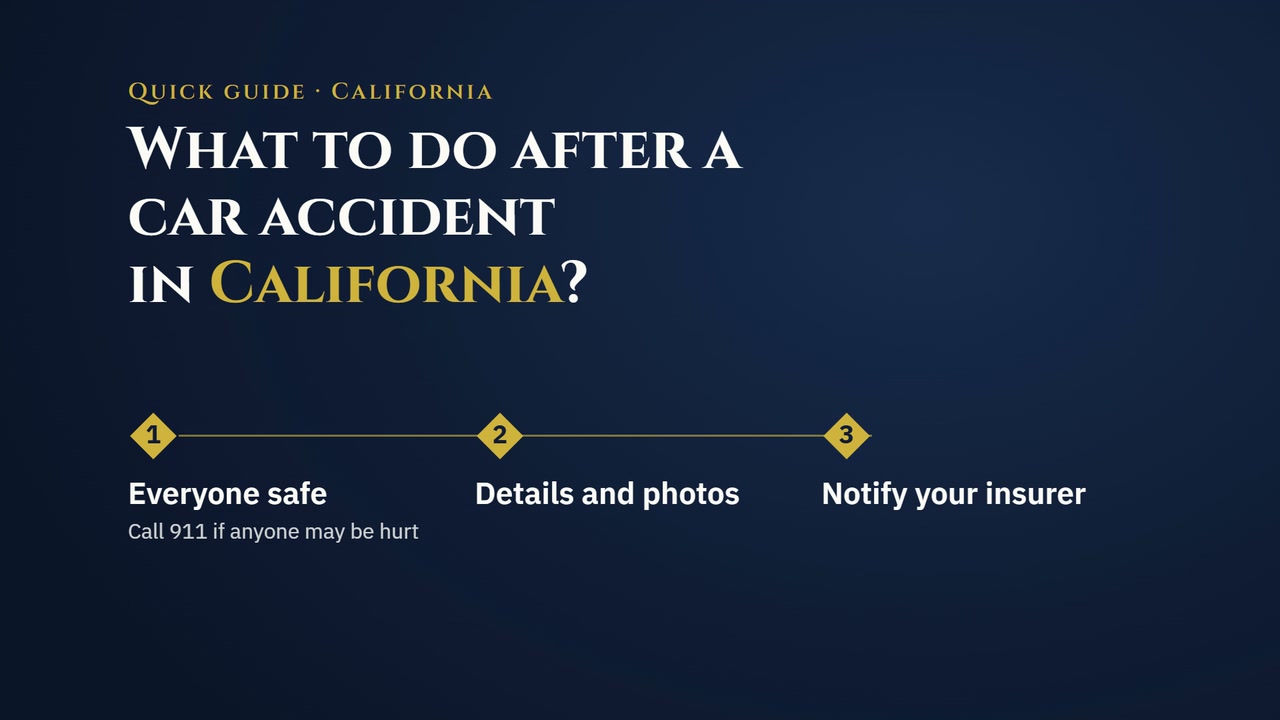
Video · 3:04 · What to Do After a Car Accident in California
Video transcript
What to do after a car accident in California? First, make sure everyone is safe, and call 911 if anyone may be hurt. Then collect details and photos, and notify your insurer. And keep the SR-1 in mind: California DMV says it must be sent within 10 days if anyone is injured or killed, or if property damage is over $1,000. This guide is from LegalMax Consulting. We help with car-accident claim paperwork, in English and Spanish. LegalMax is not a law firm and does not provide legal advice. Let's take it step by step.
Step one: move to a safe location, and call emergency services if anyone may be hurt. Step two: take photos of the vehicles, the plates, the damage, the road position, the traffic controls, debris, the weather, and any visible injuries. Step three: exchange driver, owner, insurance, vehicle, and phone information. California's Department of Insurance advises getting the names, addresses, phone numbers and driver's license numbers of all drivers. Step four: get witness names and phone numbers before people leave.
Step five: tell your insurer right away. California's Department of Insurance advises notifying your agent or insurance company immediately. And write down the claim number when you have it. Step six: the SR-1. It is a separate report: DMV says it is required in addition to any report made to the police, CHP or your insurance company. And when it applies, the deadline is 10 days.
Step seven: save your tow, storage, rental, rideshare, repair, and medical paperwork in one folder.
What to avoid: do not guess about speed, fault, injury severity, or the final repair cost. Keep your early communications factual. And if an adjuster asks for a recorded statement or a broad medical authorization, prepare before you answer.
When should you get help? Get a specialist involved when you have injury symptoms, multiple vehicles, unclear fault, an uninsured driver, a hit-and-run, a commercial vehicle, or a request for a recorded statement. LegalMax can help organize the basics in English or Spanish.
Important: this guide is general information. LegalMax is not a law firm and does not provide legal advice. No outcome is guaranteed. To get started, four details are enough: your name, your phone number, the accident date, and your carrier. Call (562) 287-5090, or visit legalmaxconsulting.com.
First-hour checklist
- Move to a safe location and call emergency services if anyone may be hurt.
- Photograph vehicles, plates, damage, road position, traffic controls, debris, weather, and visible injuries.
- Exchange driver, owner, insurance, vehicle, and phone information.
- Get witness names and phone numbers before people leave.
- Save tow, storage, rental, rideshare, repair, and medical paperwork in one folder.
Who do I have to report a car accident to in California?
Tell your insurer right away, and send DMV an SR-1 within 10 days when the rule applies.
California’s Department of Insurance advises getting the names, addresses, phone numbers and driver’s license numbers of all drivers, and notifying your agent or insurance company immediately. California Department of Insurance
The SR-1 is a separate report. DMV says it is required in addition to any report made to the police, CHP or your insurance company. California DMV: SR-1 reporting The California SR-1 guide explains the difference.
Claim timeline: the first day, week and month
The first day
- Get medical attention if symptoms appear.
- Photograph the damage before repairs or towing change it.
- Start one folder for claim numbers, bills, receipts, photos and letters.
The first week
- Confirm the claim number and the adjuster’s contact details. A California insurer generally has 15 calendar days after notice of a claim to acknowledge it and send the forms and instructions. 10 CCR § 2695.5(e)
- Write down missed work, new symptoms, treatment visits, and towing, rental and storage costs.
- Check whether the 10-day SR-1 applies to your crash.
The first month and after
- Keep treatment, repair and insurance records current.
- After proof of claim, an insurer generally has 40 calendar days to accept or deny the claim, or to tell you in writing why it needs more time. 10 CCR § 2695.7(b), (c)
- If the insurer changes its position, asks for broad documents, delays a repair approval or disputes an injury, update your timeline before the next call.
- Deadlines to sue are separate from the claim. California Courts lists 2 years for injury and 3 years for property damage, with exceptions and earlier deadlines for government agencies. California Courts: deadlines to sue For a question about your deadline, consult a licensed attorney.
What should I avoid saying after a car accident?
Do not guess about speed, fault, injury severity, or final repair cost. Keep early communications factual. If an adjuster asks for a recorded statement or a broad medical authorization, see what to prepare for a recorded statement before you answer.
When to get help
Get a specialist involved when you have injury symptoms, multiple vehicles, unclear fault, an uninsured driver, a hit-and-run, a commercial vehicle, or a request for a recorded statement. LegalMax can help you get connected with that help, such as a licensed attorney if you were hurt, in English or Spanish.
This guide is general information for California accident victims. LegalMax is not a law firm and does not provide legal advice.